
Why Custom Patches Are Making a Comeback in UK Streetwear Fashion
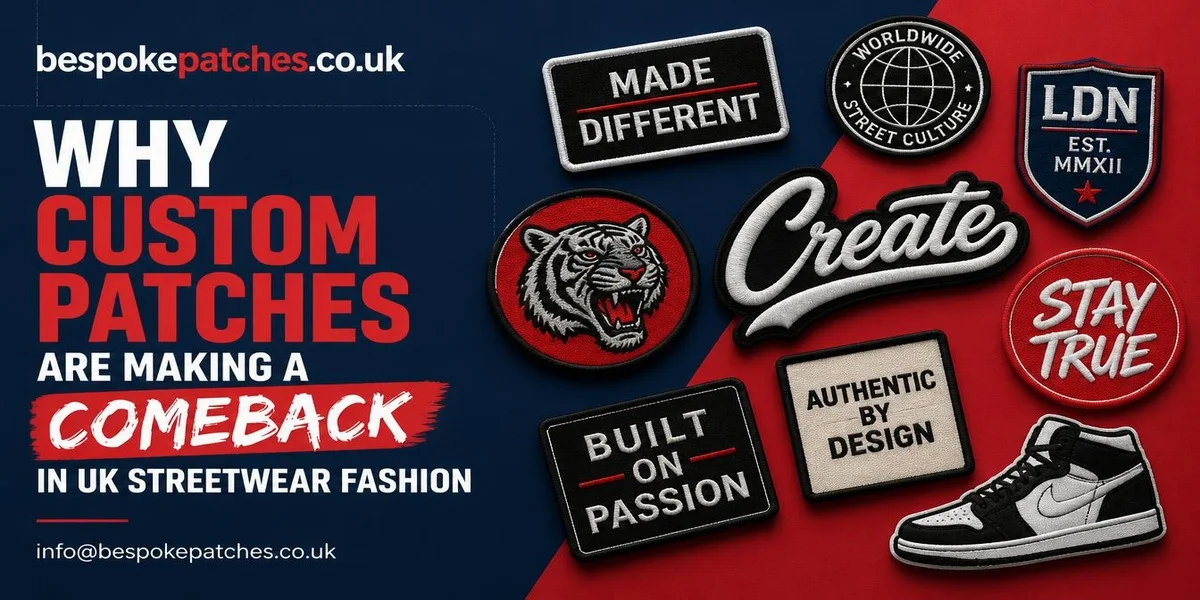
Oversized hoodies and worn-out trainers have always been a place for personality in old denim. Customised patches are a trend that has come back because, instead of building a new wardrobe, you can turn any clothing into a personal statement. But in street style, it is important to have a bespoke outlook without going overboard. It is all about individual style, subcultural references, and a casual approach to dress. Today, people use fabric motifs, which we also call patches, to add life to old clothes at low cost, create a visual identity, and try new things without changing the items themselves.
How is UK Streetwear Fashion Defined These Days?
If we talk about UK streetwear fashion, it is not simply about one uniform. It is inspired by skateboarding, music, football, workwear, grime, vintage fashion, and youth subcultures, and combines these with modern styles.
The common medium in all of these categories here is freedom. A piece of clothing can be a loose work jacket, a graphic t-shirt, wide trousers, or retro trainers. The wearer is able to decide on the final polish, the roughness, the nostalgia, and the experimentalism.
That flexibility makes it useful to have surface details. Small embroidered custom patches can make an ordinary jacket special without altering the overall character of outerwear.
Why Are the Custom Patches Appropriate for Street Style Aesthetic?
The most important thing in this whole scenario is control. A second-hand jacket can be enhanced by a single well-chosen motif and rendered truly unique. It also suits the desire to want to just make a few alterations to the clothes that are already in one’s wardrobe instead of always purchasing new garments.
Patches can convey a particular message. A tiny symbol may reference a favourite band, local area, sport, hobby or personal joke. British fashion has always sought to use clothing as a means of individuality.
The interesting part is the contrast of old and new. A worn-out jacket may be used to represent an emblem, and a faded hoodie may be used to get a worn look. The difference makes it look like it has been put together instead of purchased.
The original idea of patchwork, embroidery, and reconstructed garments was used in punk and club culture to defy the norm of dress, and modern fashion designers continue to look into patchwork, embroidery, and reconstructed fashion. Embroidery, stepped denim, embellishment, and patchwork details are also being displayed in streetwear style these days.
How Do Streetwear Enthusiasts Actually Place Patches?
It is important to know that the placement of a patch can make a bigger impact than many beginners who love streetwear fashion even know.
Jackets. Back panels, chest, and sleeves are accented with larger statements.
Hoodies. Small motif on the chest or on the lower sleeve keeps it simple.
Denim. Worn-in denim pocket areas, knees, and contrasting panels.
Trousers. Side pockets or upper legs give a workwear look.
Caps and Bags. Smaller pieces are great for adding a bit to the look without too much.
Which Patch Designs Work Best for This Look?
- Vintage lettering can evoke a varsity, motorsport, or workwear vibe.
- A cleaner result can be achieved with simple symbols.
- While high-contrast graphics work well for bolder outfits, muted thread colors seamlessly complement faded jeans or neutral jackets.
It is not just about the material, either.
- Embroidered designs add texture and give the patch a traditional look.
- Woven versions will result in a cleaner reproduction of fine lettering and detailed artwork.
- Felt has a softer, nostalgic feel to it, which is ideal for collegiate, retro-sport, and heritage-inspired looks.
When you are considering personalised iron on patches, consider the artwork. Determine the garment fabric, patch size, border, backing, and washing frequency. The shape of a great design can be off if it clashes with the garment.
What is the Best Way to Create a Custom-Made Patch?
Take a Start from the Fabric and Not the Badge
First, look at the colour, texture and pre-existing graphics. Then select a theme instead of picking up random designs. Motorsport numbers, route references and small emblems may be appropriate for a vintage racing jacket. Instead, a simple overshirt might be given one particular graphic.
Then create a paper model. Rough cut to the sizes and position on the garment. Look at the arrangement from several angles in both a step-back and close-up view. If you are looking for removable, think about temporary fastening options. Permanent pieces are usually stitched more securely, especially those worn frequently, like on clothes.
What Could Be Done by the Patchmakers to Make the Look Better?
A professional manufacturer does more than just a physical reproduction of an uploaded image.
What Do Customers Need to Inquire?
You should anticipate questions concerning size, colours, edges, backing, thread density, and fabric used in the garment. They can overlook small details, as complex art can be hard to discern. They are also able to suggest backings that are removable or permanent.
If someone is curious about how to use felt patches, a maker can give information about appropriate uses, methods of attaching, and ways to take care of them. That is important because felt is different from embroidered or woven, and smooth fabrics.
Consultation is important for patch makers. They are able to identify when lettering is too small, when the border is too thin, or when colours are required in a design. They may offer a shape that goes along a pocket. This input can take the place of an idea and transform it into a detail.
Why Are Patches Returning in Streetwear Fashion?
The comeback is actually a collision of several habits. Older styles are being embraced again, with people adding their own spin to second-hand clothes and looking for information that is not widely manufactured.
In modern British design, there is still some embroidery and patchwork. Another trend that is noticed these days is streetwear collections with upcycling, patchwork, and reworked clothing.
Also, there is a move towards individuality without being loud. You can be more thoughtful with one meaningful reference than an outfit filled with logos. Patches with customised designs have an edge in this regard. They allow users to be involved in the design process, not just given a ready-made appearance to wear.
FAQs
Does streetwear fashion look good with personalised patches?
Yes, patches are a logical complement to streetwear because of its emphasis on individuality. They can reinforce a specific style or subculture while customising commonplace items like cargo pants, sweatshirts, hats and denim jackets.
Does removing patches harm clothes?
If not attached properly or attached to a thin, stretchy material, they can. Examine the structure of the garment first before deciding on the attachment method.
Can patches be used on vintage clothes?
Yes, but old antiques require additional attention. Trial the attachment methods in an unobtrusive place before making changes.
How many patches can be incorporated on a single jacket?
There is no set amount. Take one or two and increase beyond that as needed, but be sure they relate to the same visual concept.
Is it possible to mix different patch materials together?
Yes. Embroidered, woven, and felt can be used together to create contrast, as long as the colour and scale of these pieces are in harmony.
Final Considerations to Determine Before You Place an Order
This newfound appreciation of the embellishment of fabric has come as part of a general shift in attitudes towards clothing. Rather than seeking to acquire all new clothing, the wearers are altering what they already have and revealing their identities through details. In UK street style, using custom patches is not new since experimentation has always been a defining factor. The best way to do things is not to add it because it is there. Look for references that convey meaning and pay attention to the proportions of the garment, and let one strong detail speak for itself.